Introduction
Every morning, residential society gates experience the same challenge: residents are rushing to work, children are going to school, delivery executives are arriving, domestic workers are entering, visitors are waiting and vehicles are moving in and out at the same time. When the gate security process depends mainly on manual visitor logbooks, unverified delivery entries and inadequately trained gate staff, even a small delay can quickly become a traffic bottleneck.
For a residential society, security is not only about preventing unauthorized entry. It is also about creating a gate-management process that is secure, organized, fast and convenient for residents. A structured combination of trained security personnel and technology-enabled visitor workflows can help societies manage people and vehicles more efficiently.
Why Residential Society Gates Become Bottlenecks
A busy society gate handles multiple categories of people every day, including residents, guests, delivery personnel, domestic workers, maintenance teams, cab drivers, contractors and service providers. Without a clear process, security personnel may have to manually verify every person, make phone calls to residents and write information into registers.
During peak hours, these individual checks can create queues at the entrance. At the same time, rushing through the verification process can create security gaps. The objective should therefore be to improve both security control and movement efficiency.
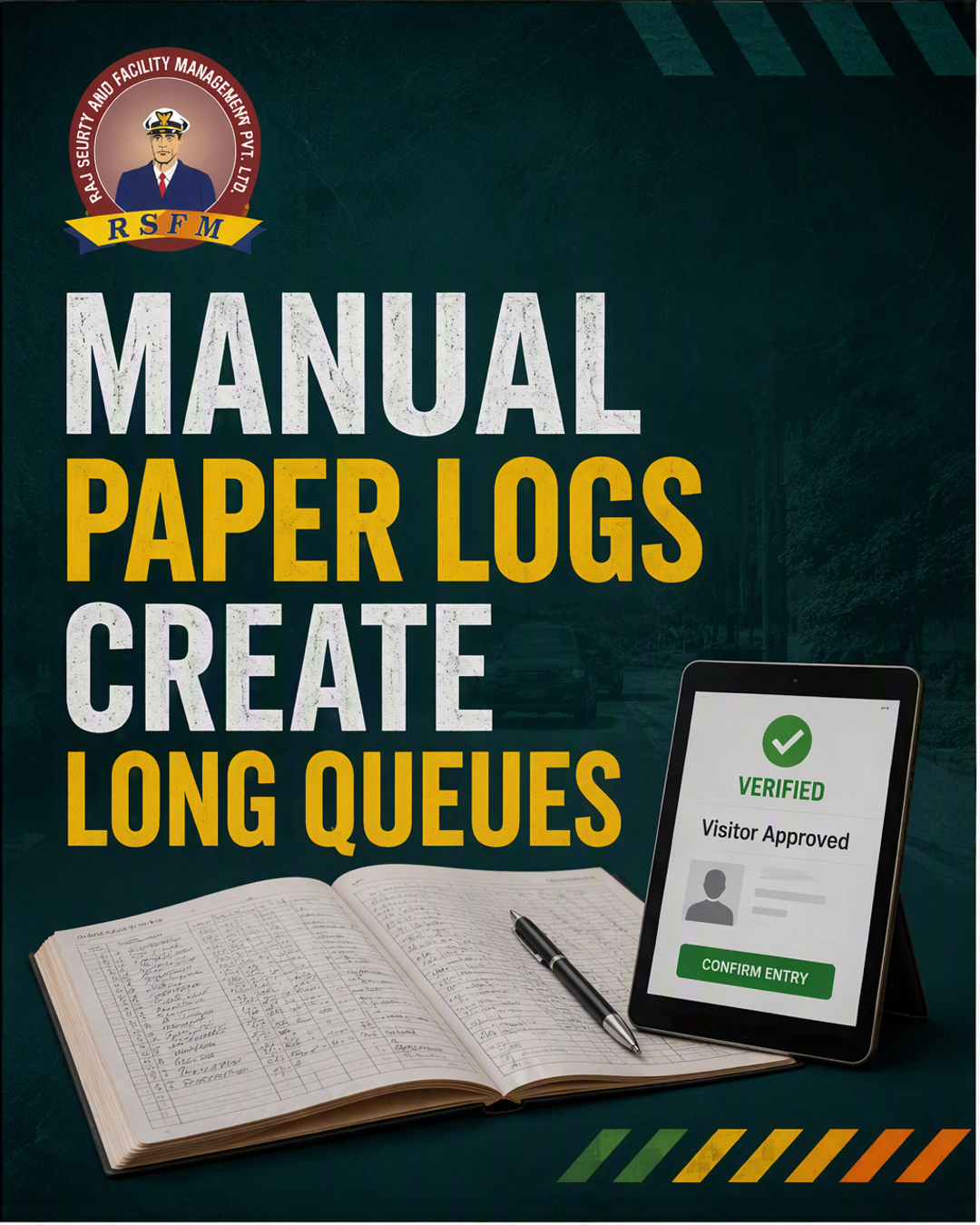
1. Manual Visitor Logbooks Slow Down Entry
Traditional visitor registers require visitors to provide their name, contact details, flat number and purpose of visit. Security staff may then need to contact the resident for confirmation. When several visitors arrive together, the process becomes slower and creates a queue.
A digital visitor management workflow can help organize this information electronically. Depending on the system selected by the society, residents may be able to pre-authorize visitors while the gate team can verify the visitor and record entry digitally.
2. Unverified Delivery Entries Create Additional Pressure
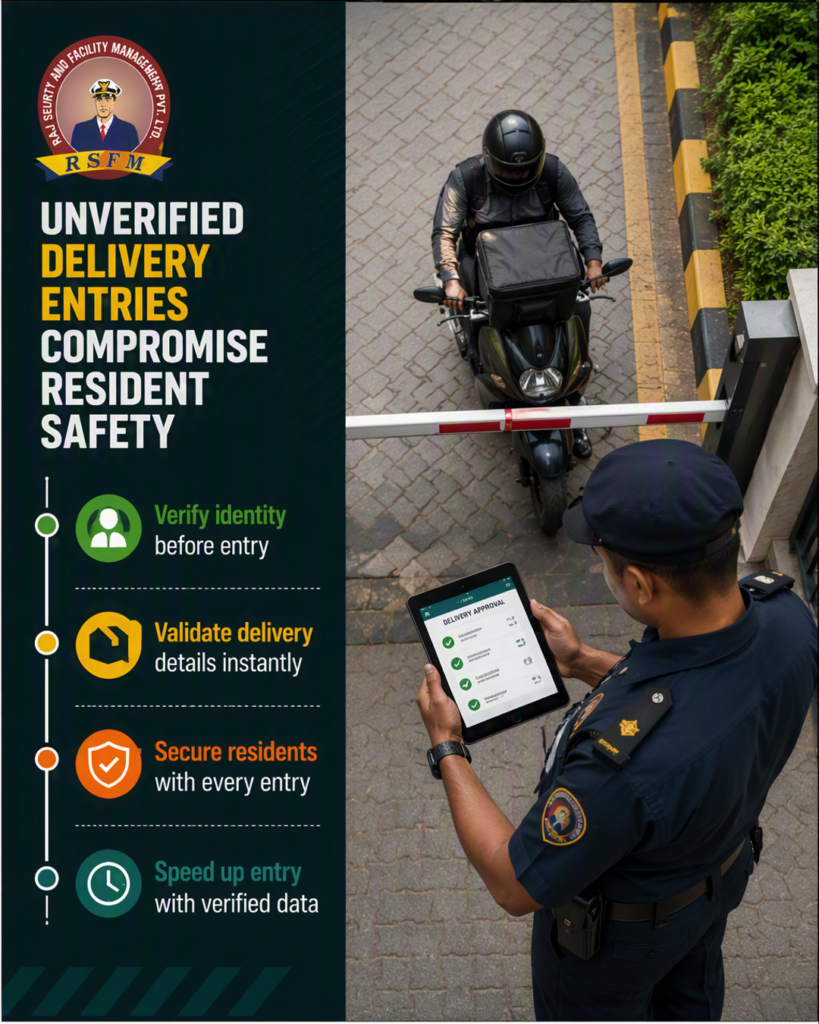
Modern residential societies receive a large number of food deliveries, courier packages, e-commerce orders and service visits every day. If every delivery requires repeated manual verification, the gate can become crowded, particularly during lunch and evening hours.
A structured delivery-management process can help identify the delivery person, destination flat and purpose of entry according to the society’s rules. The security team can then follow the appropriate access procedure without compromising resident security.
3. Untrained Gate Staff Can Increase Waiting Time
Technology alone cannot solve a gate-management problem. Security personnel need proper training on visitor verification, resident communication, emergency procedures, vehicle management and the society’s specific entry protocols.
A trained security guard should know when to allow routine entry, when to seek resident confirmation and when to escalate an unusual situation to the supervisor or society management.
4. Resident Convenience and Security Must Work Together
A good residential security system should not make residents feel that security is an obstacle. The objective is to create a process where authorized residents and visitors can move smoothly while suspicious or unauthorized activity receives additional attention.
Technology can support this objective by reducing repetitive manual work and giving security personnel better information at the point of entry.
5. Technology-Enabled Visitor Management
Depending on the requirements of the residential community, a technology-enabled visitor workflow may include digital visitor registration, QR-based entry, resident pre-approval, delivery management, visitor records, access control and digital reporting.
Such systems can help create a digital record of visitor activity and provide society management with better visibility into daily gate operations.
6. Smart Vehicle Gate Management
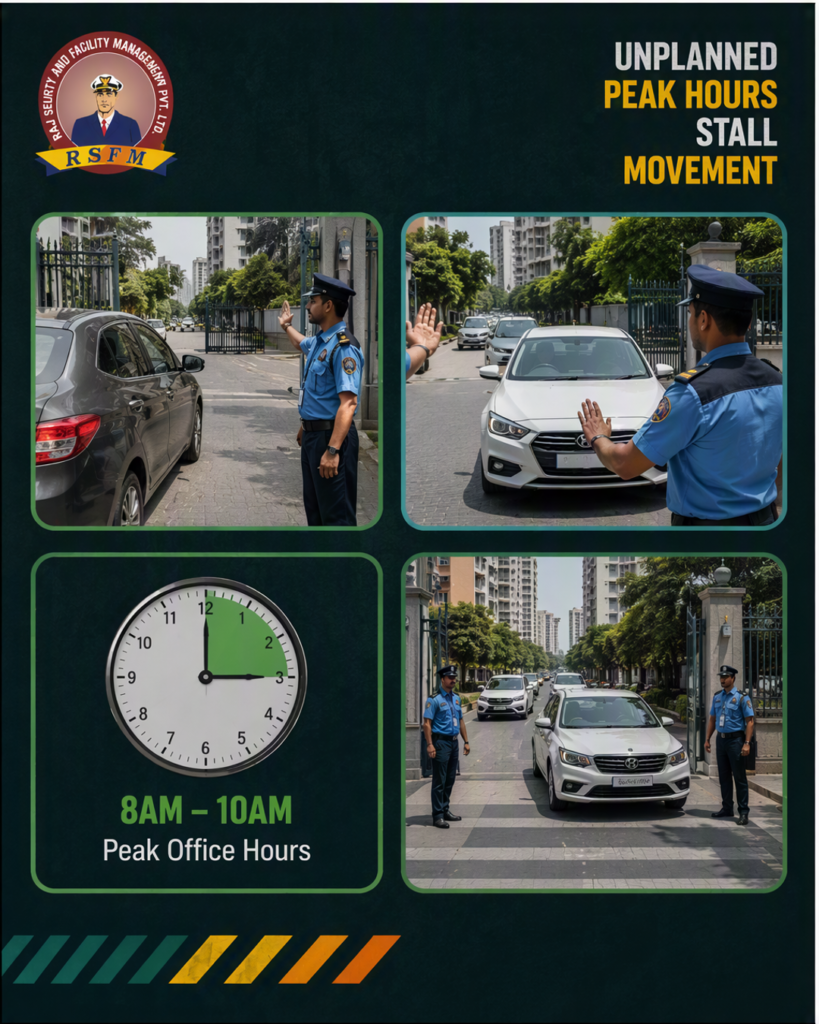
Vehicle movement is another major source of congestion at residential society gates. Resident vehicles, guest vehicles, taxis, delivery vehicles and service vehicles may all arrive simultaneously.
Depending on the society’s requirements, solutions such as RFID-based access, ANPR number-plate recognition, boom barriers and digital vehicle records can be integrated to streamline authorized vehicle entry and exit.
7. CCTV & AI-Assisted Gate Monitoring
CCTV cameras provide an additional layer of visibility around the gate, parking areas and other common spaces. AI-enabled video analytics may also be considered for selected security requirements, such as configured alerts or activity monitoring.
The purpose of such technology is to support the security team with better information and faster alerts. Human security personnel remain important for verification, communication and physical response.
8. A Structured Society Gate Workflow
Resident / Visitor Arrival → Identification → Digital Verification → Resident Confirmation Where Required → Access Approval → Entry Record → CCTV Monitoring → Controlled Movement → Exit Recording
For deliveries, the workflow can be adapted according to the society’s rules:
Delivery Arrival → Delivery Person Verification → Flat / Resident Details → Entry Approval → Controlled Access → Delivery Completion → Exit Recording
9. Security for Domestic Workers, Staff & Service Providers
Residential societies also need to manage recurring access by domestic workers, housekeeping staff, drivers, technicians and maintenance personnel. A structured system can maintain appropriate records and help security personnel identify authorized recurring personnel.
Society management can establish its own rules regarding identity verification, timings, access areas and registration requirements.
10. Emergency & Incident Management
Gate security is also an important part of emergency management. Security personnel should know the society’s procedures for medical emergencies, fire incidents, suspicious activity, unauthorized entry attempts and other urgent situations.
Digital incident reporting can help record what happened, when it happened, where it happened and what action was taken. This can support communication between security supervisors, society management and residents.
Major Gate Access Bottlenecks & Their Structured Solutions
Manual Visitor Register: Digital visitor management and pre-approval workflows.
Unverified Deliveries: Structured delivery verification and controlled access.
Vehicle Queues: Smart vehicle access, ANPR/RFID and organized gate lanes.
Repeated Resident Calls: Visitor pre-approval and digital notification systems where supported.
Untrained Gate Staff: Regular training, SOPs, supervision and performance monitoring.
Limited Visibility: CCTV, digital records and centralized reporting.
Why Trained Security Personnel Still Matter
Technology can automate several routine processes, but a residential community still needs trained people to handle real-world situations. Security personnel interact with residents, visitors, delivery personnel and emergency responders every day.
The ideal approach is therefore not simply technology or manpower. It is the appropriate combination of trained security personnel, clearly defined SOPs and technology-enabled gate management.
Residential Security Services in Pune
RAJ SECURITY AND FACILITY MANAGEMENT PVT LTD has been operating since 2006 and provides security and facility management solutions for different types of properties and organizations. Our residential security approach combines trained security personnel with structured gate-management procedures and, where required, technology-enabled security solutions.
For residential communities looking to improve visitor management, vehicle movement, delivery verification and overall gate operations, the solution can be designed according to the society’s size, entry points, daily traffic and security requirements.
Conclusion
Manual visitor logbooks, unverified delivery entries and inconsistent gate procedures can create unnecessary delays when a residential society is busiest. A structured security-management system can help address these bottlenecks while maintaining appropriate access controls.
By combining trained and pre-verified security personnel, digital visitor workflows, smart vehicle management, CCTV monitoring and clear gate SOPs, residential communities can work towards a gate environment that is more organized, responsive and convenient for residents.
Looking for Better Gate Management for Your Society?
If your residential society in Pune is facing long entry queues, visitor-management issues, delivery congestion or inconsistent gate security, contact RAJ SECURITY AND FACILITY MANAGEMENT PVT LTD to discuss a structured gate-management solution.
RAJ SECURITY AND FACILITY MANAGEMENT PVT LTD
Phone: +91 9970053346
Email: admin@rajsecurityservices.com
Website: www.rajsecurityservices.com
#PuneSecurity #SocietyManagement #FacilityManagementPune #ResidentialSecurity #GateSecurity #PuneHousing #VisitorManagement #SocietySecurity
Leave a Reply