Security Services in Pune | Industrial Security | Factory Security | Residential & Corporate Security
It was 10:17 in the morning.
A delivery vehicle arrived at the gate of a factory in Pune. The security guard recognised the driver. He had seen him many times before.
The factory was busy. Employees were entering, another vehicle was waiting, and the guard was already handling several things at once.
So, for a moment, he skipped one small part of the normal entry process.
The vehicle entered.
Nothing happened.
No alarm. No argument. No suspicious activity.
The vehicle completed its work and left.
Was there a security incident? Not necessarily.
But there was a security gap.
And this is how many security problems begin—not with a dramatic incident, but with a small shortcut that nobody considers important.
1. “He Comes Here Every Day.”
This is one of the most common sentences heard at security gates.
A regular driver becomes familiar. A contractor becomes known to the guards. A vendor visits the property every week. Slowly, verification can become less strict.
But professional security should not depend only on whether a guard recognises someone.
The important question is not “Do I know this person?”
It is:
“Is this person authorised to enter today?”
Depending on the property, proper access control may include identity verification, vehicle details, visitor approval, contractor confirmation, gate passes and entry-exit records.
Familiarity should never replace procedure.
2. The Gate Was Open for “Just Five Minutes”
Five minutes doesn’t sound like a security problem.
But imagine a busy industrial gate. One vehicle is being checked, another person is asking the guard a question, a delivery vehicle is waiting and employees are moving through the entrance.
The gate remains open.
During those few minutes, who is actually controlling the movement?
A gate is not simply an opening in a boundary wall. It is the first security checkpoint.
Good gate security means having a clear process for people, vehicles, visitors, contractors and material movement, according to the property’s requirements.
The objective is not to keep a gate closed all day.
The objective is to make sure that every movement through the gate is controlled.
3. The Night Guard Knew Something. The Morning Guard Didn’t.
Imagine a night guard notices an unusual vehicle near the rear gate.
He informs the supervisor and makes a note.
Morning arrives.
A new guard takes charge.
But nobody tells him what happened during the night.
The new guard starts his shift without important information.
Nothing may happen.
But the security system has already lost something valuable: continuity.
That is why shift handover matters.
Important incidents, expected visitors, pending contractors, equipment problems, unusual observations and special instructions should be communicated properly from one shift to the next.
Security doesn’t stop when one guard’s shift ends. Information has to move with it.
4. “It’s Only a Delivery.”
For a factory or warehouse, the gate may handle dozens of vehicles every day.
Raw-material trucks, finished-goods vehicles, spare-parts deliveries, contractors, service engineers and transporters may all arrive at the same entrance.
But should every vehicle be treated in exactly the same way?
Probably not.
A visitor entering an office is different from a truck entering a manufacturing plant.
A contractor entering a restricted production area is different from a courier delivering a parcel.
The security process should therefore ask:
Who is entering? https://rajsecurityservices.com/blogWhy are they entering? Where are they going? What are they carrying? What is authorised to leave?
The exact procedure will depend on the site’s operations and SOP, but the principle remains simple:
Don’t treat every entry as the same entry.
5. The Guard Was at the Gate — But Was He Actually Doing Security?
This is an issue that many properties overlook.
A security guard may be asked to receive parcels, manage parking, open gates, assist housekeeping, carry materials, handle visitors and answer administrative questions—all while being expected to monitor the gate continuously.
That creates a simple question:
Who is watching the gate while the guard is busy doing something else?
This doesn’t mean a guard can never assist with anything outside the primary post.
It means the property’s security-critical responsibilities must remain clear.
Before deployment, the client and security agency should understand the guard’s duties, supervisor’s responsibilities, emergency escalation process and site-specific instructions.
Because a security guard is not simply manpower.
He is part of the security system.
6. “Don’t Worry, We Have CCTV.”
CCTV is useful.
But a camera cannot walk to the gate, question a visitor or physically respond to an unusual situation.
Imagine CCTV shows something unusual at 2:00 AM.
Who sees it?
Who checks it?
Who responds?
Who informs the supervisor?
Who records the incident?
Who contacts the client if necessary?
This is why technology should support the security team rather than exist separately from it.
CCTV, trained security personnel, supervision and a clear response process should work together.
Having cameras is not the same as having a complete security system.
The better question is not:
“Do we have CCTV?”
It is:
“What happens when CCTV shows us something unusual?”
7. Nothing Happened — So Nobody Reported It.
This may be the smallest mistake of all.
A guard notices that a boundary light is not working.
An unknown vehicle waits outside the gate.
A visitor enters the wrong area.
A contractor forgets to return a pass.
A door is found unlocked.
Nothing serious happens.
So nobody reports it.
But what if the same thing happens tomorrow?
And again next week?
Small observations can reveal bigger patterns.
That is why incident reporting is not only about major incidents. Good security also records the things that almost became incidents.
Was It the Guard’s Fault?
When something goes wrong, the easiest reaction is:
“The security guard made a mistake.”
Sometimes an individual mistake may be involved.
But professional security management should ask a few more questions.
Was the guard properly trained? Were the instructions clear? Was the post properly designed? Was the guard being supervised? Was he handling too many unrelated duties? Was the technology working? Was there a proper reporting process?
Security is rarely about one person alone.
It is a system of people, processes, supervision and technology.
Pune Is Growing — And Security Requirements Are Changing
Pune is no longer one type of security market.
A residential society in Undri has different requirements from a manufacturing unit in Chakan.
A corporate office in Hinjewadi is different from a warehouse in Bhosari.
A factory in Ranjangaon may have completely different access-control requirements from a commercial property in Wakad.
That is why a professional security agency should not simply ask:
“How many guards do you need?”
The better question is:
“What does your site actually need?”
That can involve gate security, visitor management, vehicle control, contractor management, material movement, patrolling, shift handover, incident reporting, supervisor visits and emergency response—depending on the property’s actual requirements.
Expanding Security Coverage Across Pune, PCMC & MIDC Areas
As Pune’s industrial and residential areas continue to expand, security support also needs to become more accessible locally.
RAJ SECURITY AND FACILITY MANAGEMENT PVT. LTD. has recently expanded its operational presence across Pune, PCMC and major industrial areas.
As part of this expansion, we have also recently opened branches in Chakan and Ravet to improve local coordination and support for clients in surrounding areas.
For us, expansion is not simply about putting more locations on a map.
It is about being closer to the sites where security supervision, coordination and operational support are required.
Our service coverage includes requirements across areas such as Pune, PCMC, Chakan, Talegaon, Bhosari, Ranjangaon and surrounding industrial and commercial areas, subject to site assessment and deployment requirements.
Because when a security issue needs attention, distance should not become another problem.
Security Is Not About Having More Guards. It’s About Having the Right System.
A property can have ten guards and still have security gaps.
Another property may have a smaller team but a better-defined system.
The difference can be clear responsibilities, proper supervision, controlled access, good communication, regular reporting, appropriate technology and a defined response process.
That is why professional security should be viewed as:
People + Process + Supervision + Technology
Not simply:
More Guards = More Security
Before Choosing a Security Agency, Ask These Questions
Before signing a security contract, ask the agency how they will assess your site, who will supervise the guards, what happens if a guard does not report for duty, how incidents are reported and how they will review whether the security arrangement is actually working.
The answers can tell you much more than a quotation alone.
Final Thought
The biggest security weakness may not look dangerous.
It may be a familiar driver who wasn’t checked.
A gate left open for five minutes.
A shift handover that never happened.
A delivery vehicle allowed inside without proper confirmation.
A guard distracted by non-security work.
A CCTV alert nobody responded to.
Or a small incident that nobody bothered to report.
Security failures don’t always make noise.
Sometimes they look completely normal.
And that is exactly why they deserve attention.
At RAJ SECURITY AND FACILITY MANAGEMENT PVT. LTD., we believe professional security begins before an incident happens—with proper planning, trained personnel, supervision, clear procedures and continuous attention to the small details.
Because sometimes, the difference between a secure property and a vulnerable one is not a bigger wall.
It’s a better security system.
Frequently Asked Questions
1. What are the most common security mistakes in factories?
Common weaknesses can include poor visitor verification, uncontrolled vehicle movement, inadequate material checks, weak shift handovers, insufficient patrolling and poor incident reporting. The exact risks depend on the factory layout and operations.
2. Why is gate security important for an industrial property?
The gate is a key access-control point. It can be used to manage people, vehicles, visitors, contractors and material movement according to the site’s security procedures.
3. Does CCTV replace security guards?
No. CCTV and security personnel perform different functions. CCTV can provide monitoring and recording, while trained security personnel can verify, intervene according to instructions and escalate incidents.
4. What should a security guard check at a factory gate?
Depending on the site’s SOP, this can include employee access, visitor authorization, vehicle details, contractor documentation, gate passes, material movement records and other site-specific requirements.
5. Why is shift handover important?
A proper handover helps the incoming guard understand pending visitors, incidents, equipment issues, special instructions and other information relevant to the next shift.
6. Does Raj Security provide industrial security services in Pune?
Yes. Raj Security provides industrial-security services based on site requirements, including gate control, visitor and contractor movement, patrolling, shift-based guarding and incident escalation. Raj Security
7. Does Raj Security provide security services in Chakan MIDC?
Raj Security accepts security-service requirements in Chakan MIDC, subject to site assessment, manpower availability and deployment confirmation. Raj Security
8. What is PSARA and why is it relevant?
The Private Security Agencies (Regulation) Act, 2005 regulates private security agencies in India. The Ministry of Home Affairs states that a private security agency must hold a licence under the Act to carry on or commence the business of providing private security services. Ministry of Home Affairs
9. How do I choose a security agency in Pune?
Consider licensing/compliance, guard verification and training, supervision, site assessment, deployment process, replacement arrangements, incident reporting and the agency’s ability to meet your specific site requirements.
Looking for Security Guard Services in Pune?
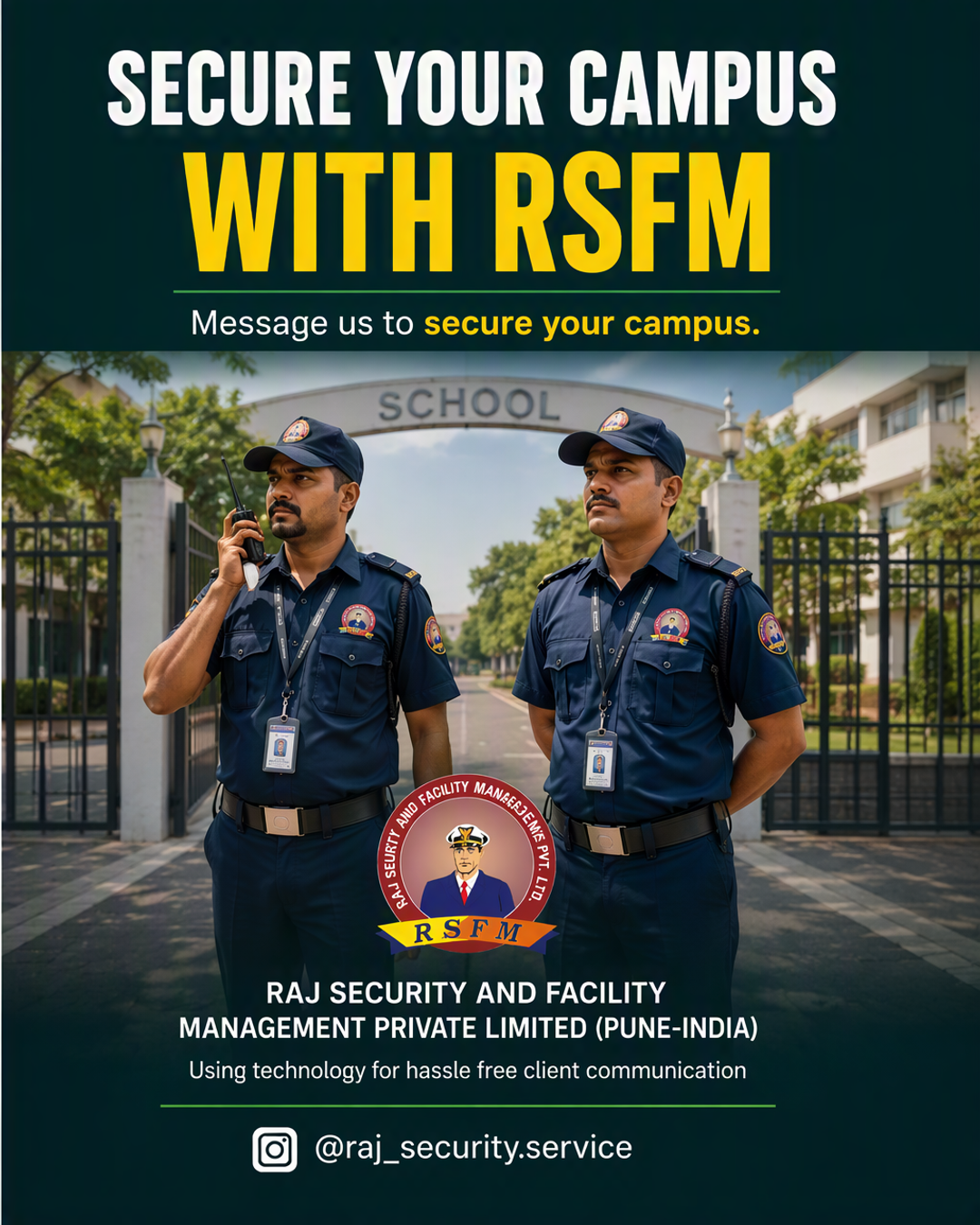
Raj Security provides security solutions for residential societies, factories, warehouses, corporate offices, industrial units and commercial properties across Pune, PCMC and surrounding areas.
RAJ SECURITY AND FACILITY MANAGEMENT PVT. LTD.
Pune, Maharashtra
Call: +91 99700 53346
Email: admin@rajsecurityservices.com
Website: rajsecurityservices.com
Leave a Reply