Introduction
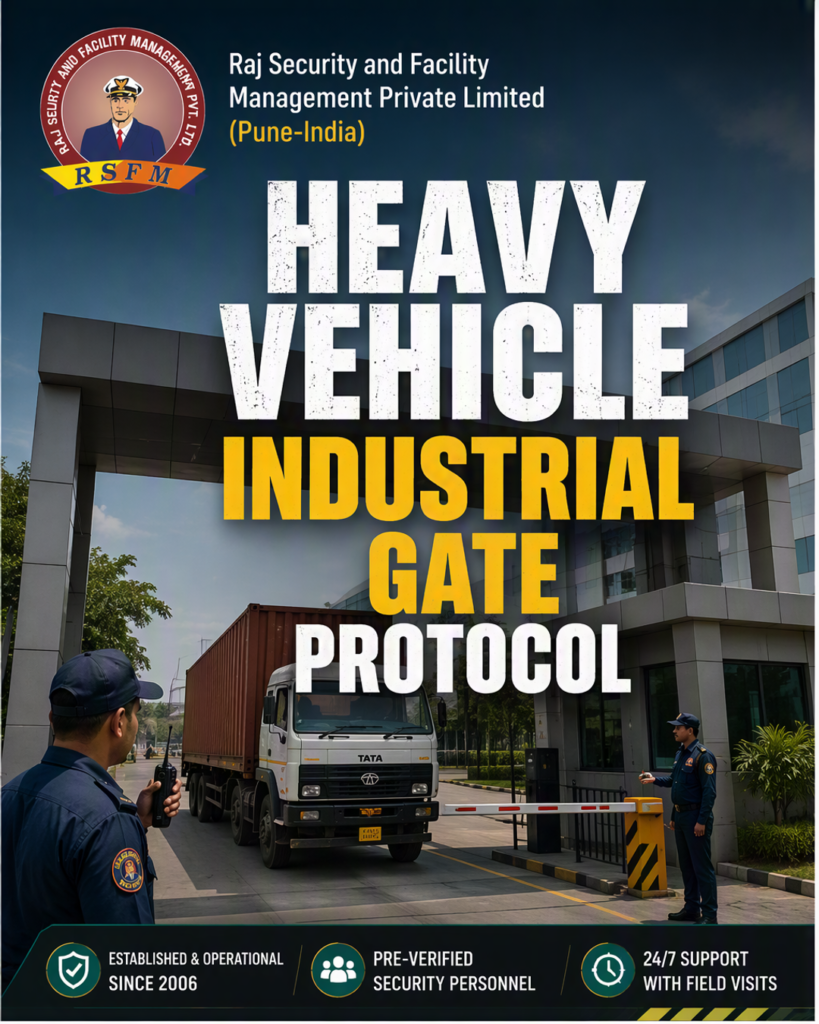
Heavy vehicles, trucks and container vehicles entering and leaving an industrial facility require a structured security and movement-control process. In a busy industrial environment, a vehicle may carry valuable materials, equipment or finished goods, while the internal yard may simultaneously have trucks, forklifts, employees, contractors and pedestrians moving through different areas. A well-defined Heavy Vehicle Industrial Gate Protocol helps security personnel control vehicle entry, verify documentation, guide internal movement and complete final exit checks in an organized manner.
At RAJ SECURITY AND FACILITY MANAGEMENT PVT LTD, industrial security operations can be structured around three important stages: Verify Manifest Before Gate Clearance, Guide Internal Yard Movement Safely, and Inspect Seal Before Final Exit. These stages create a practical security workflow for industrial plants, warehouses, logistics facilities and corporate industrial campuses.
1. Verify Manifest Before Gate Clearance
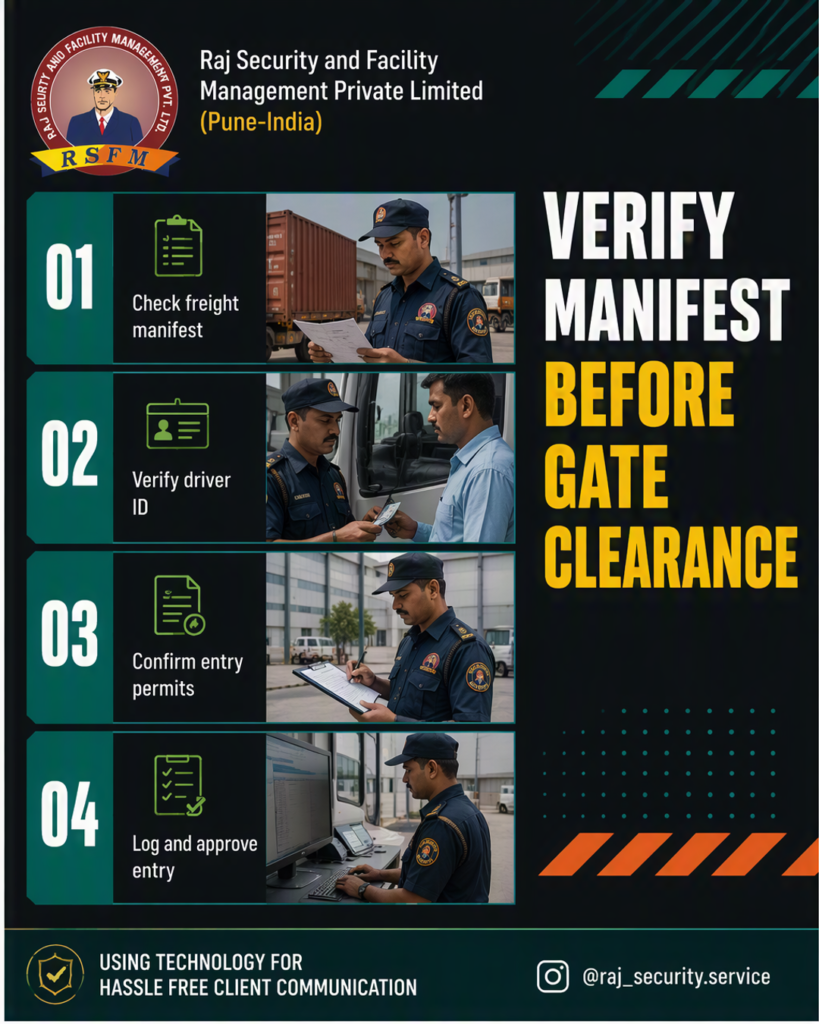
The first security checkpoint begins before a heavy vehicle receives clearance to enter the premises. Security personnel should verify the relevant vehicle and shipment information according to the client’s approved gate procedure. The purpose is to ensure that the vehicle, driver, material and entry authorization correspond with the information provided by the facility.
A. Check Freight Manifest
The freight manifest should be checked against the information available for the incoming vehicle. Security personnel can verify details such as vehicle information, material description, quantity or package details and other information specified by the client’s procedure. Any discrepancy should be referred to the authorized department before gate clearance.
A properly maintained manifest-verification process creates a documented checkpoint and helps reduce the possibility of unauthorized or incorrectly documented material movement.
B. Verify Driver ID
The identity of the driver should be checked before allowing the vehicle to proceed. Security personnel can verify the driver’s identification document and compare the details with the relevant vehicle or shipment records as required by the site’s security policy.
Where the facility requires additional verification, the driver may also be checked against an approved driver list, delivery schedule or authorized entry information.
C. Confirm Entry Permit
The next step is to confirm whether the vehicle has the required entry permit, gate pass, delivery authorization or appointment. The security team should verify that the authorization is valid for the particular vehicle, driver, material and purpose of entry, wherever such information is part of the client’s process.
If required authorization is missing or information does not match, the vehicle should be held at the designated waiting area while the concerned department verifies the entry.
D. Log and Approve Entry
After successful verification, the vehicle entry should be recorded in the applicable gate register or digital security system. The record may include vehicle number, driver details, entry time, manifest reference, permit information and other required details.
Once the required checks are completed, the authorized security personnel can approve the vehicle for entry and guide the driver towards the designated internal route.
2. Guide Internal Yard Movement Safely
Once a heavy vehicle enters the facility, security responsibility does not end at the gate. Large industrial yards can involve simultaneous movement of trucks, containers, forklifts, employees, contractors and pedestrians. Therefore, internal vehicle movement should follow a defined route and site-specific traffic-management procedure.
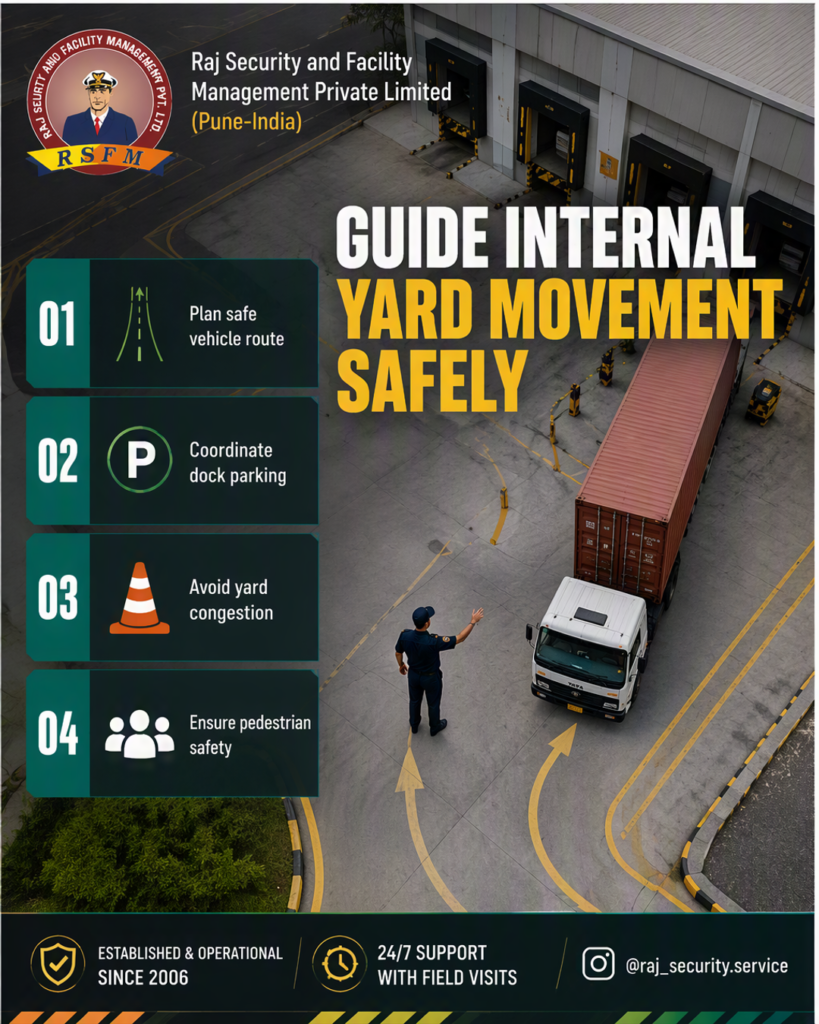
A. Plan a Safe Vehicle Route
The vehicle should be directed through the designated internal route to reach its loading, unloading, docking or parking location. Security personnel should be familiar with restricted areas, one-way routes, turning points, emergency access routes and designated vehicle zones established by the facility.
Where required, trained security personnel can guide the driver during reversing, turning or movement through congested areas, following the site’s approved safety procedures.
B. Coordinate Dock Parking
Heavy vehicles should be directed to the designated loading or unloading dock according to the facility’s operational schedule. Coordination between security, logistics, warehouse and dock teams can help ensure that vehicles reach the correct location without unnecessary movement inside the yard.
The objective is to maintain an organized flow of vehicles and avoid unnecessary waiting or movement around active loading and unloading zones.
C. Avoid Yard Congestion
Industrial yards can become congested when multiple vehicles arrive or depart at the same time. A structured vehicle-entry schedule, designated waiting areas, controlled parking and proper routing can help maintain smoother movement.
Security personnel can coordinate with the relevant facility teams to prevent vehicles from blocking gates, emergency routes, pedestrian pathways or loading areas.
D. Ensure Pedestrian Safety
Pedestrian safety is a critical part of industrial vehicle movement. Heavy vehicles have limited visibility around certain areas, particularly during reversing and turning. Employees and visitors should use designated pedestrian pathways wherever available.
Security personnel can help control movement at critical crossing points and ensure that vehicle operations do not unnecessarily interfere with designated pedestrian routes.
3. Inspect Seal Before Final Exit
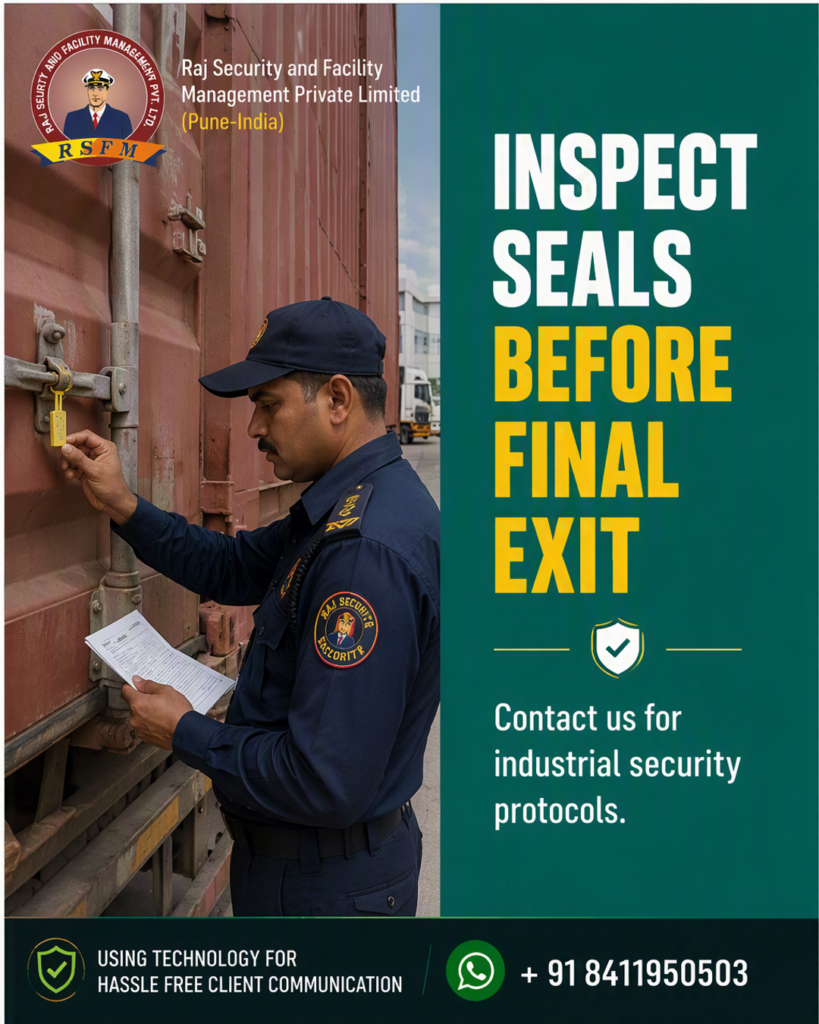
The final exit checkpoint is another important layer of industrial security. Before a container or sealed vehicle leaves the facility, the applicable seal, documentation and exit authorization should be checked according to the client’s approved procedure.
A. Inspect the Container or Cargo Seal
Security personnel can inspect the seal and compare the seal information with the applicable documentation. Any visible damage, mismatch or irregularity should be reported and referred to the authorized person before final clearance.
B. Verify Exit Documentation
The relevant dispatch documents, material movement records, exit permit or other required authorization should be checked before the vehicle leaves the premises. The exact documents will depend on the facility’s operational and security procedures.
C. Confirm Vehicle and Material Details
Vehicle number, driver details, material information and applicable dispatch records can be checked before final gate clearance. This creates an additional verification point between the physical vehicle and the recorded dispatch information.
D. Record and Approve Final Exit
After completing the required checks, the security team can record the exit time and other required information in the gate register or digital system. Final clearance should be provided according to the authority matrix and procedures established by the client.
Technology-Enabled Industrial Gate Security
Modern industrial security can combine trained security personnel with electronic and AI-enabled technologies. Depending on the site’s requirements, an integrated system may include ANPR cameras, boom barriers, CCTV video analytics, access control, visitor management, vehicle tracking, digital gate registers, command-centre monitoring and incident reporting systems.
For example, an ANPR-enabled gate can assist with vehicle identification, while CCTV can provide visual monitoring of gate and yard activity. Digital records can make entry and exit information easier to retrieve, while centralized monitoring can help security management review alerts and incidents.
Complete Heavy Vehicle Security Workflow
Vehicle Arrival → Freight Manifest Check → Driver ID Verification → Entry Permit Confirmation → Digital Entry Log → Gate Clearance → Safe Internal Route → Dock Coordination → Yard Movement Control → Pedestrian Safety → Dispatch Verification → Seal Inspection → Exit Documentation → Final Gate Clearance
Role of Security Personnel
Technology can support the process, but trained security personnel remain important for physical verification, communication, exception handling and response. Security personnel can coordinate with logistics, warehouse, transport and facility-management teams when a vehicle does not match the expected information or when an unusual situation occurs.
Benefits of a Structured Industrial Gate Protocol
Better Vehicle Control: A defined procedure creates a consistent process for incoming and outgoing heavy vehicles.
Improved Documentation: Entry, movement and exit information can be systematically recorded.
Reduced Unauthorized Movement: Multiple verification points can help identify discrepancies before clearance.
Safer Yard Operations: Defined vehicle routes and controlled movement can support safer interaction between vehicles and pedestrians.
Better Dispatch Control: Final documentation and seal verification provide an additional checkpoint before vehicle exit.
Technology Integration: Digital systems can improve visibility, reporting and monitoring when appropriately implemented.
Why Choose RAJ SECURITY AND FACILITY MANAGEMENT PVT LTD?
RAJ SECURITY AND FACILITY MANAGEMENT PVT LTD has experience in security and facility management operations across government, defence, industrial, commercial and residential environments. The company’s existing profile includes industrial and government security assignments, along with experience involving material movement control, emergency support, documentation and security supervision.
Our approach can combine trained security personnel, structured industrial gate protocols and suitable electronic security technologies according to the requirements of each facility.
Conclusion
Heavy vehicle security is not limited to opening and closing the main gate. A professional industrial security system should cover the complete vehicle journey—from manifest verification and driver identification to entry authorization, safe internal yard movement, dock coordination, pedestrian safety, dispatch verification and final seal inspection.
By combining clearly defined security protocols with trained personnel and appropriate electronic security systems, industrial facilities can create a more controlled, transparent and systematic approach to heavy vehicle movement.
Contact RAJ SECURITY AND FACILITY MANAGEMENT PVT LTD
For Industrial Security, Heavy Vehicle Gate Security & Integrated Security Solutions
Phone: +91 9970053346
Email: admin@rajsecurityservices.com
Website: www.rajsecurityservices.com